“waist and pain up, but also nausea and want to vomit, even rice can not eat ......” 81-year-old grandmother Liu (a pseudonym) covered the right side of the waist, face full of pain. Who would have thought that this repeated torment her more than a month of lumbar pain, is actually the ureter in the “small stone” at work.

More than a month ago, Grandma Liu suddenly felt a vague pain in her right lower back without any signs. She went to the hospital and found that she had hydronephrosis on the right side and ureteral stone with stenosis on the right side. After the implantation of right ureteral stent, her back pain was relieved and she was discharged from the hospital successfully.
I thought it would be fine, but more than 20 days later, Grandma Liu's back pain once again, but also more nausea symptoms. She went to the hospital and was diagnosed with right hydronephrosis with right ureteral stone and stenosis, and her symptoms worsened after stenting. A few days later, Grandma Liu was admitted to the hospital for the third time, and her condition was found to be aggravated with infections and heart failure, etc. She was discharged from the hospital after a temporary stabilization of her condition.
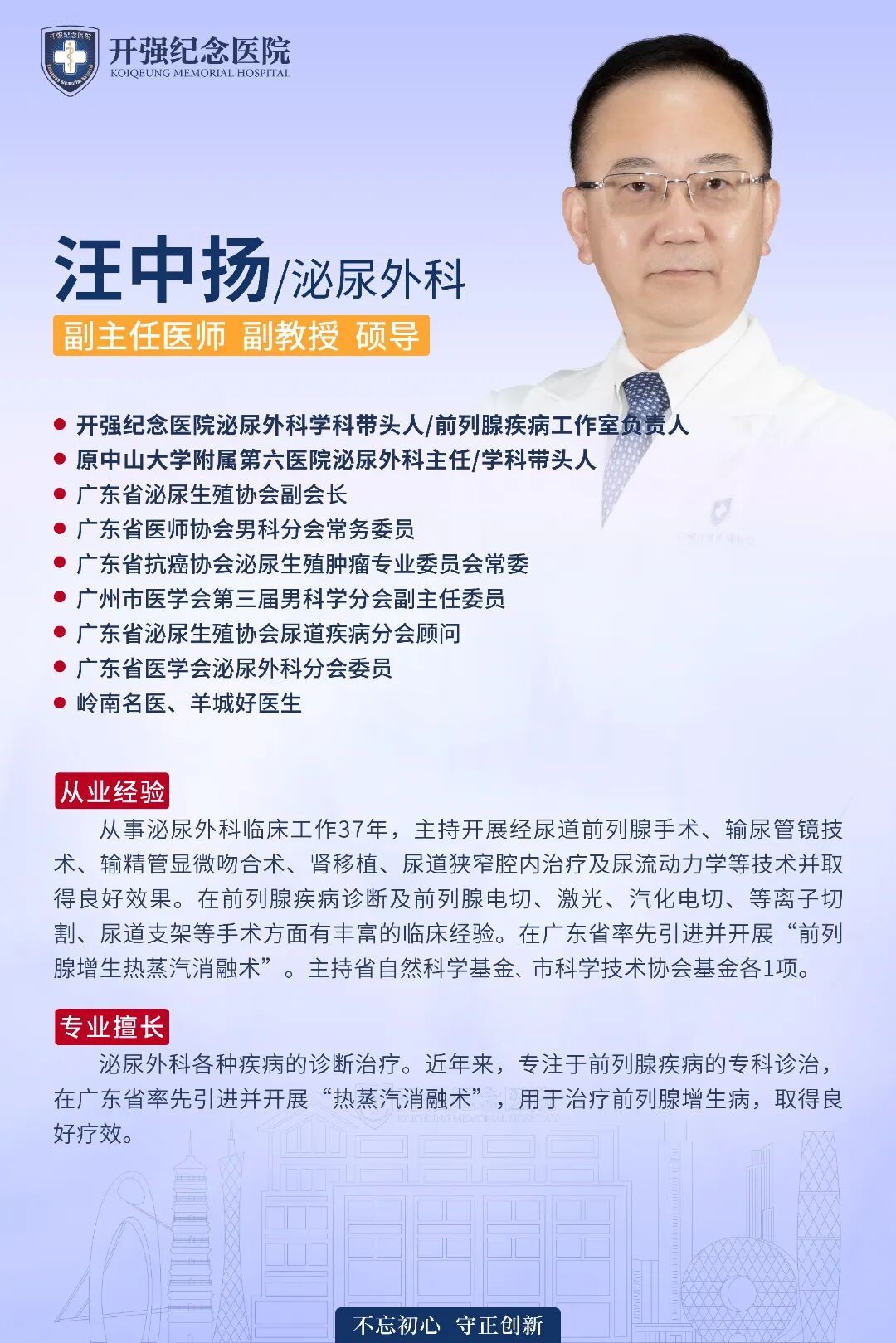
In just over a month, with three hospital admissions, two stent implantations, and repeated aggravation of her condition, Grandma Liu and her family were so anxious that they finally came to the specialist clinic of Prof. Wang Zhongyang of the Department of Urology at Kaiqiang Memorial Hospital.
Grandma Liu, who is 81 years old and has a variety of underlying diseases herself, was afraid that she would not be able to cope with the thought of surgery. Prof. Wang Zhongyang saw the old woman's concern and patiently calmed her down, explaining her condition in detail and telling her that she didn't need to worry too much and that the team would work out the safest and most appropriate treatment plan.
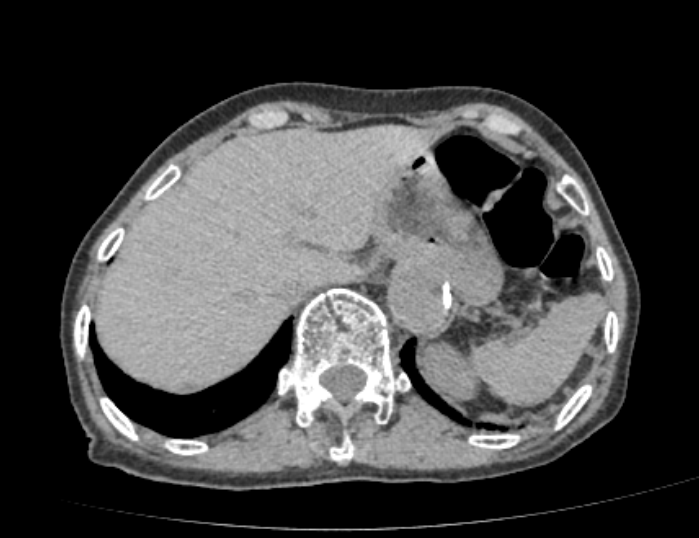
Subsequently, Grandma Liu did a comprehensive systematic examination, and the urological CT scan showed that her situation was more complicated than imagined: the right ureter had already undergone tubing surgery, and the upper section was going in a tortuous way; the right kidney not only had multiple stones, but also had cysts; there were multiple stones in the upper section of the right ureter, and there were also abnormal nodules in the lower section, and there were small stones in the bladder as well. The final diagnosis was: renal ureteral stones with fluid and infection, atrial fibrillation combined with heart failure, and lung infection.
The core problem with the recurrence of Grandma Liu's condition is that the previous treatment only treated the symptoms but not the root cause. Many people may not realize thatUreteral stent implantation is like a “temporary tube” for the blocked ureter, the purpose is to temporarily unblock the urine, relieve hydronephrosis and pain, but it can not eliminate the stone itself - the stone is still in the ureter, and the minerals in the urine may be deposited on the surface of the stent, causing the stone to grow larger and even aggravate the infection and ureteral stenosis, which is why Grandma Liu's condition has worsened repeatedly. the surface of the stent, leading to larger and more stones, and even aggravating infection and ureteral stenosis, which is why Grandma Liu's condition has repeatedly worsened.What's more dangerous is that Grandma Liu's kidney function has been impaired due to long-term ureteral obstruction, creatinine is obviously elevated, and she also has gastrointestinal dysfunction, coupled with the loss of body fluids due to long-term vomiting, her physical condition is getting worse and worse, and the stones must be completely removed as soon as possible in order to preserve her kidney function and control her condition.
Considering Grandma Liu's age and multiple underlying diseases, the risk of surgery was indeed not small. Professor Wang Zhongyang took the lead, combined with doctors from cardiology, anesthesiology, nutrition and other related departments to conduct a multidisciplinary consultation, repeatedly assessed Grandma Liu's physical condition, and formulated a thorough treatment plan. The first step was to stabilize Grandma Liu's heart failure and lung infection, control the urinary tract infection, replenish body fluids, and improve her physical condition in preparation for surgery. After treatment, Grandma Liu's heart failure improved significantly and the infection was controlled, finally reaching the conditions for surgery.
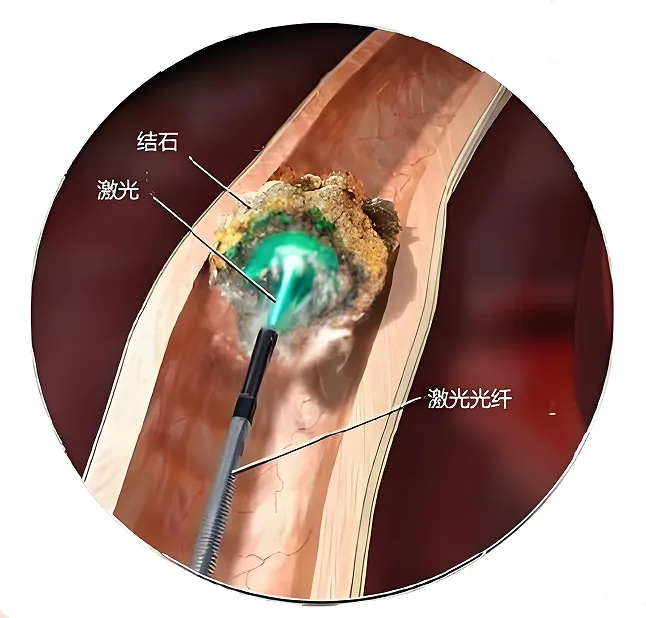
Taking into account Grandma Liu's condition, Prof. Wang Zhongyang's team decided to use transurethral ureteroscopy with Holmium laser lithotripsy and replacement of the ureteral stent at the same time. This is a minimally invasive procedure with the advantage ofNo incision, no wound on the body surface, through the body's natural urethra into the bladder, ureter, directly to the location of the stone, less trauma, faster recovery, theIt is very suitable for patients with advanced age and many underlying diseases like Grandma Liu. Moreover, Grandma Liu's stone was larger than 6mm in diameter and in a special location, with very little possibility of self-discharge, as well as obvious pain and hydronephrosis, which made it a clear indication for surgery.
On the day of the surgery, the operation was carried out smoothly under the supervision of Prof. Wang Zhongyang. Through the slim ureteroscope, the doctor entered Grandma Liu's urethra and bladder under direct vision, and first took out one of the stents in the body, then continued to go deeper into the ureter, and found the stones hidden inside - 10 centimeters away from the urethra, there was a 10×8 mm yellowish-white stone; 15 centimeters away, there was another 7×8 mm stone; at 16 cm, there was even a mass of stale gravel encased in flocculent material.
For these stones, the doctor activated the holmium laser to precisely pulverize the stones into powder, and part of the powder could be naturally excreted with urine, while the remaining small stones were carefully removed with stone extractors. In order to avoid the complication of ureteral stenosis after the operation, the doctor paid extra attention to protect the ureteral mucosa during the operation to minimize the damage. After removing the stones, a new ureteral stent was implanted to ensure smooth drainage of urine, to protect kidney function and to create conditions for the repair of the ureteral mucosa. The surgery was successfully completed and Grandma Liu was discharged from the hospital.

Ureteral stones are not a “small problem” and if left untreatedIt may trigger hydronephrosis, kidney function damage, and even lead to serious complications such as infection and heart failure.Surgery is by no means the end of the road, either.Regular postoperative reviews are also important.Regular monitoring can detect possible long-term complications such as ureteral stenosis in time to intervene and ensure the effectiveness of the treatment and the long-term health of the kidneys.
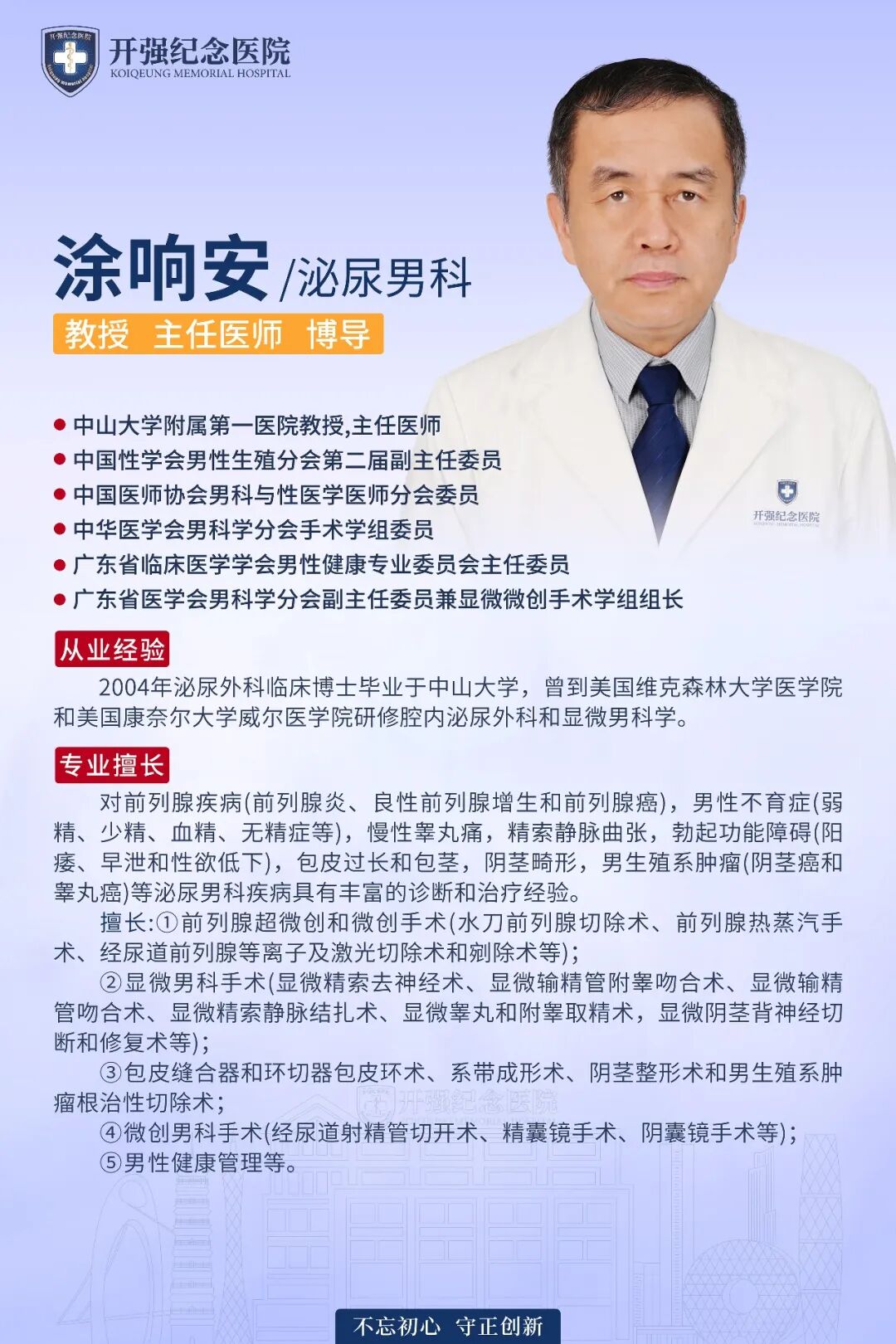
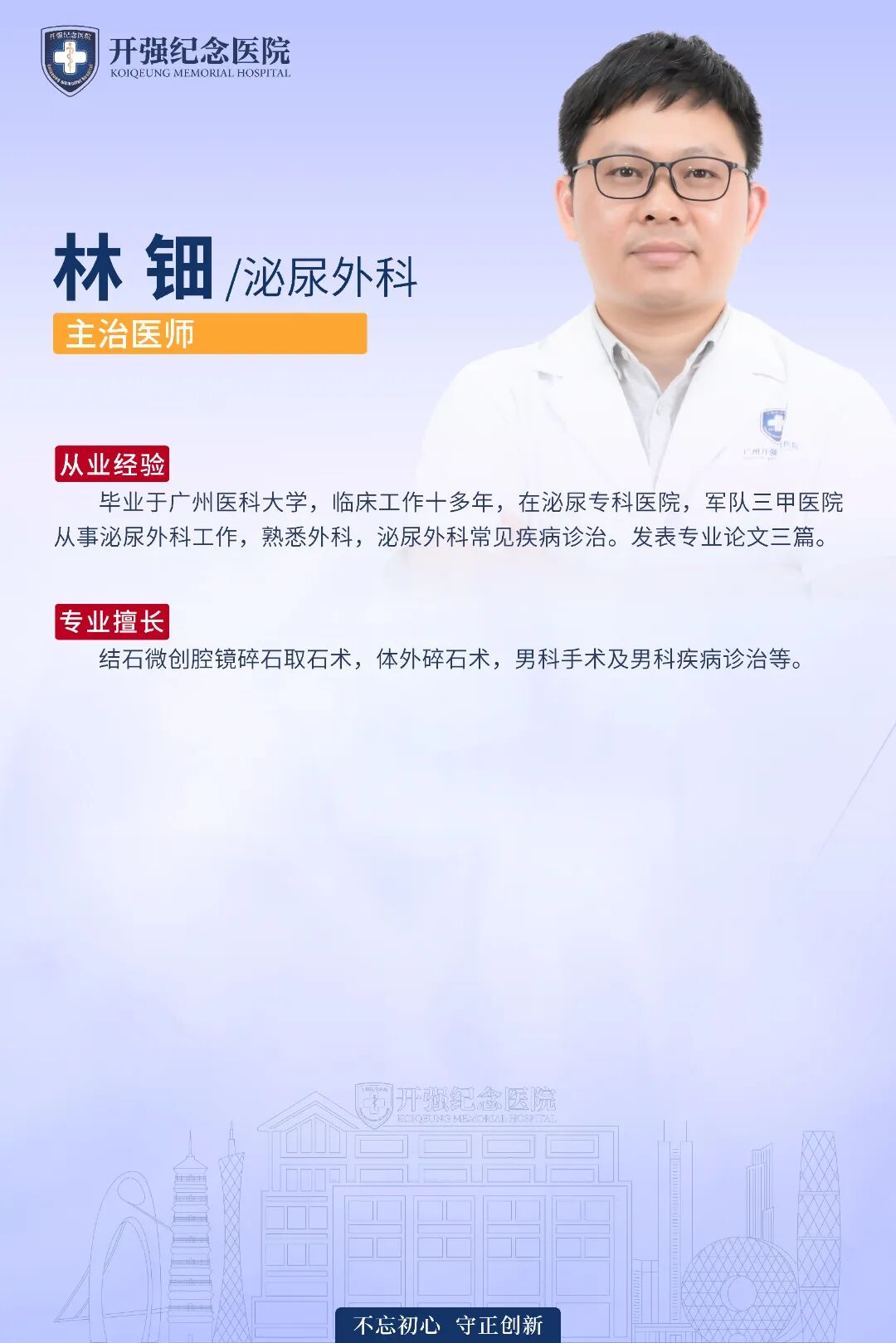
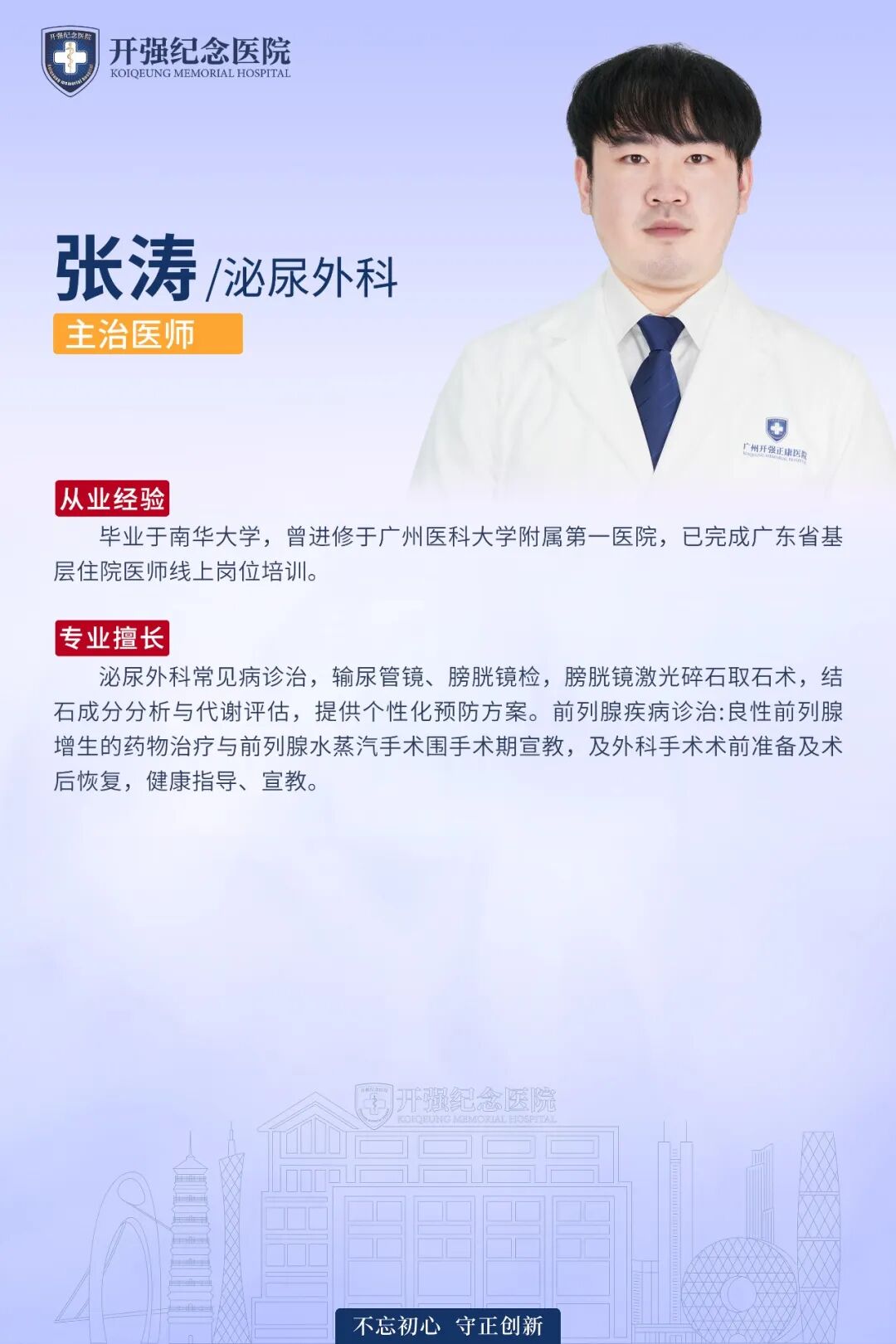
The Department of Urology at Kai Keung Memorial Hospital, with a team of specialists led by Professor Wang Zhong Yang, focuses on prostate diseases, urinary stones, injuries, malformations, tumors, urinary tract obstruction, and male infertility,Varicocele, erectile dysfunction, chronic testicular pain,penile deformityand other diseases.
The department will be equipped with a full set of advanced endoluminal diagnostic and therapeutic equipment. Urology 80% surgery can be minimally invasive through laparoscopy, prostate electrosurgery, and other minimally invasive treatments, and it is skilled in responding to urological emergencies and emergency and general diagnostic and therapeutic work.
The department has introduced the international advanced technology of “prostate vapor ablation” and “prostate urethral dilatation” for the treatment of prostate hyperplasia. These two technologies are newly developed ultra-minimally invasive technologies for the treatment of prostate hyperplasia in recent years, and our hospital is one of the first hospitals in South China to introduce these two technologies and apply them in the clinic.
"Introduction of experts"