
The medical report says ‘atrophic gastritis.’
Am I close to stomach cancer?

When many people see the word “atrophy” on their gastroscopy report, their hearts are suddenly tightened. On the Internet, there are rumors that atrophic gastritis is a precancerous condition, which makes people more and more afraid.
indeed, Gastric atrophy sounds scary, but it's nowhere near as close to stomach cancer as you might think.
Many people's first reaction is: the stomach has become smaller? Can't eat anymore?
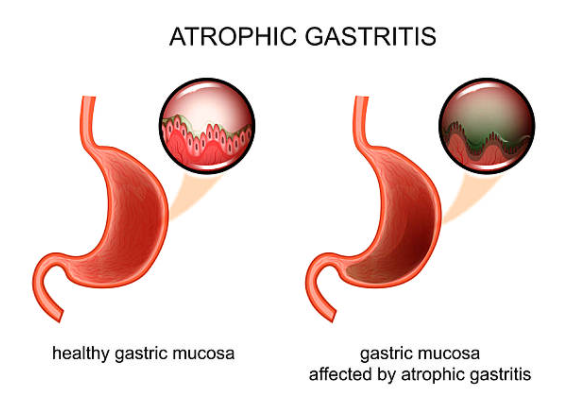
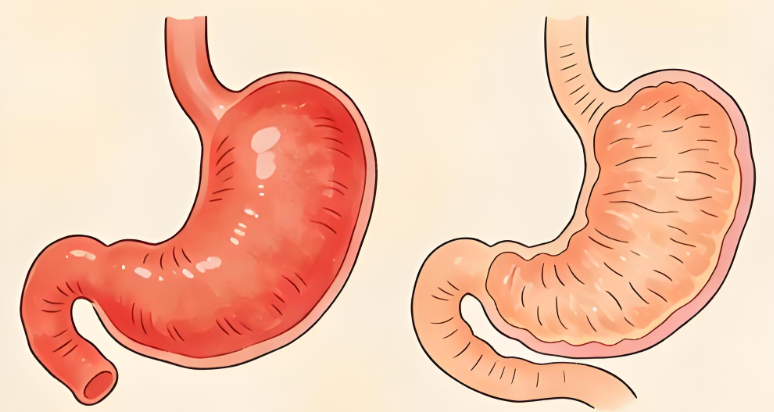
Actually no. Gastric atrophy, which is not a reduction in the size of the stomach, isThe stomach's “lining has thinned and weakened”.
Our stomach wall was originally covered with a thick layer of gastric mucosa, which is distributed with a large number of secretion of gastric acid, digestive enzymes “glands” - they are like pots and pans in the kitchen, responsible for digesting food.
However, if these glands are slowly damaged due to long-term chronic gastritis, Helicobacter pylori infection, poor dietary habits, or aging, the gastric mucosa will become thinner and the number of glands will decrease. This pathological change is medically called gastric atrophy, and the corresponding disease name is chronic atrophic gastritis.
Let's use an analogy: a healthy stomach is like a moist and thick sponge that can absorb, secrete, and digest; while an atrophied stomach is like a dried up and aged rag - looking at it, but its function is not as good as it used to be. Over time, the meal does not taste good, the body becomes weak, weak stomach wall is also easy to bleed, and even pull out black stool.
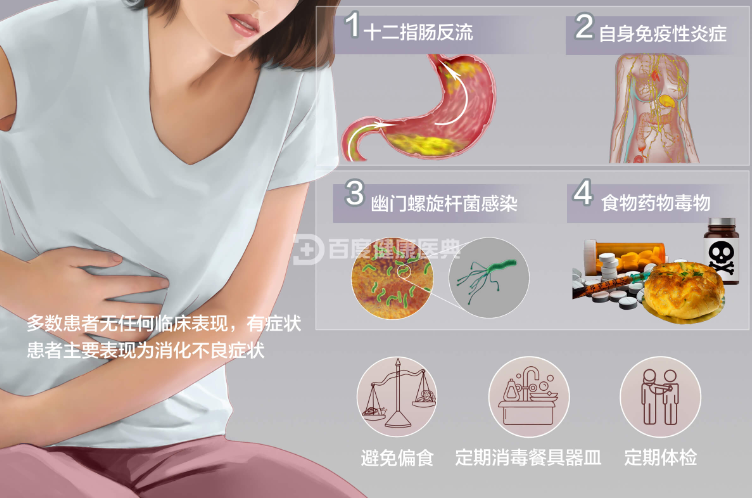
Gastric atrophy often has no obvious symptoms in the early stages, and many people find it by chance during a physical examination. However, as the disease progresses, the body will send out some easily ignored “warning signals”.If the following manifestations persist or recur, prompt gastroscopy is recommended:
1. Vague pain in the upper abdomen
The pain was not severe, but it was always a “bad stomach” feeling, light and heavy, not regular.
2. Always bloated after meals
Not much to eat but easy to stomach bloating, 1 hour after the meal still feel food “stuck in the stomach”, accompanied by acid reflux, hiccups.
3. Frequent nausea and loss of appetite
When you see a meal, you get tired of it, not because you are tired of eating, but because your stomach is too lazy to work.
4. Unexplained weight loss
Wasn't on a diet, but lost over ten kilograms in a short period of time and couldn't grow it back with any amount of supplementation.
These symptoms may appear alone, or may come together. Many people think it is the “old stomach disease” to endure the past, in fact, the gastric mucosa is quietly thinning.
This is everyone's main concern.
Indeed.Chronic atrophic gastritis is medically categorized as a precancerous condition of stomach cancer - but it's not the same as stomach cancer, and not everyone develops stomach cancer.
So why is it linked to stomach cancer?
Long-term gastric mucosal atrophy will make the gastric wall's defense ability decline. In this “weak defense” state, the gastric mucosa is more prone to intestinal metaplasia, heterogeneous hyperplasia - these two steps are really closer to the cancer stage. If coupled with H. pylori infection, high salt diet, smoking and drinking, family genetics and other factors, the risk of gastric cancer will be significantly higher.
The typical evolutionary path is:Healthy gastric mucosa → chronic gastritis → atrophy → intestinal metaplasia → heteroplasia → gastric cancer
But please note: the road is not a one-way street, and we can brake in time at any step. The vast majority of people don't make it to the last step.
If the medical report already says “atrophic gastritis”, don't panic, do the following three things, you can completely control it.
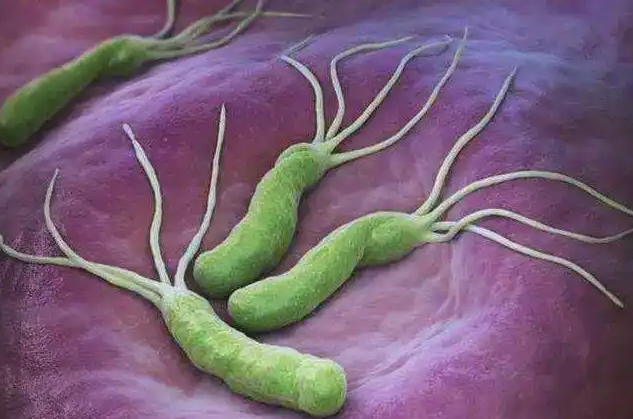
1. Eradication of Helicobacter pylori
Helicobacter pylori is the number one culprit of gastric atrophy and gastric cancer. Once gastric atrophy with H. pylori infection is diagnosed, eradication treatment should be standardized under the guidance of a doctor. Killing this bacteria will stop it from damaging the gastric mucosa and reduce the risk of cancer.
2. Lifestyle adjustments
-
Diet:Eat more fresh fruits and vegetables, whole grains, high-quality protein (fish, eggs, milk); eat less high salt, pickled, spicy food; regular meals, each meal seven or eight minutes full, to the stomach “load reduction”.
-
Stop smoking and limit alcohol:Nicotine, tar and alcohol in tobacco can directly damage the gastric mucosa.
3. Periodic review of gastroscopy
This is a key tool for monitoring the condition and preventing stomach cancer.
-
Patients with mild gastric atrophy:suggestion 1~2 years A repeat gastroscopy.
-
Moderately severe patients:suggestion Six months to one year A repeat gastroscopy.
Gastroscopy allows doctors to directly observe the state of gastric mucosa and take tissue for pathological biopsy if necessary, so that precancerous lesions can be detected and intervened in time.
☞ Click to make an appointment for the Gastroenterology Screening Package ☜
Inquiry: 020-8307-0088
Gastric atrophy is not to be feared, the fear is to “ignore it”. Remember the three key words:Check for Helicobacter pylori, change bad habits, regular gastroscopyScientific prevention and control, let the gastric mucosa be “strong” again. Scientific prevention and control, so that the gastric mucosa again "strong", away from the threat of stomach cancer!
Disclaimer: This article only provides routine health science, related medical issues please consult a medical professional, if you are not feeling well, please seek medical attention. This article part of the picture and material from the network, if any infringement, please contact the editor to delete!
Endoscopy and
Gastrointestinal Tract Early Cancer Screening Center
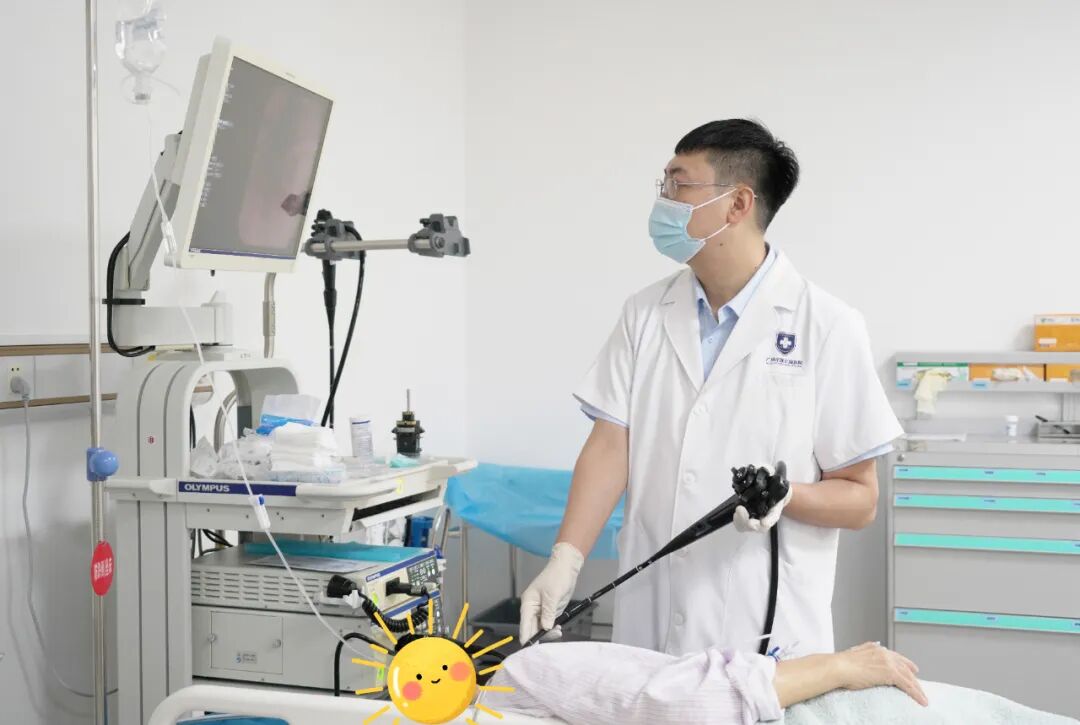
Endoscopy Diagnosis and Treatment and Early Gastrointestinal Cancer Screening Center, is a specialty of Kaiqiang Memorial Hospital. With Professor Tao Yu of Sun Yat-Sen Memorial Hospital, Sun Yat-Sen University as the subject leader, the department is committed to early prevention and control of gastrointestinal tumors, early screening and diagnosis, and precision treatment.
The center is equipped with gastrointestinal endoscopy room, resuscitation room, gastrointestinal mirror cleaning and sterilizing room, mirror storage room, water purification equipment room and so on. It has a series of advanced facilities and equipments such as ultra-high-definition gastrointestinal electronic endoscopy system, full-automatic soft endoscopy cleaning system, intelligent surgical treatment system and so on. It can carry out painless gastrointestinal examination, minimally invasive endoscopic treatment of early gastrointestinal cancer, endoscopic treatment of gastrointestinal polyps and other specialized medical technologies, and make unremitting efforts for the early screening and treatment of gastrointestinal and digestive diseases, and provide patients with comprehensive diagnostic and treatment programs integrating “examination-diagnosis-treatment”.
Scope of diagnosis and treatment
● Diseases of the esophagus:Reflux esophagitis, esophageal cancer, esophageal foreign bodies, Barrett's esophagus, etc;
● Stomach disorders:Peptic ulcer, gastritis, early cancer of the digestive tract, etc;
● Intestinal Diseases:Intestinal polyps, Crohn's disease, ulcerative colitis and various benign and malignant tumors of the intestines;
● Gastrointestinal endoscopy:Routine and painless gastroenteroscopy, endoscopic hemostasis of gastrointestinal bleeding from various causes, endoscopic resection of gastrointestinal polyps, etc.
▪Team of experts▪